
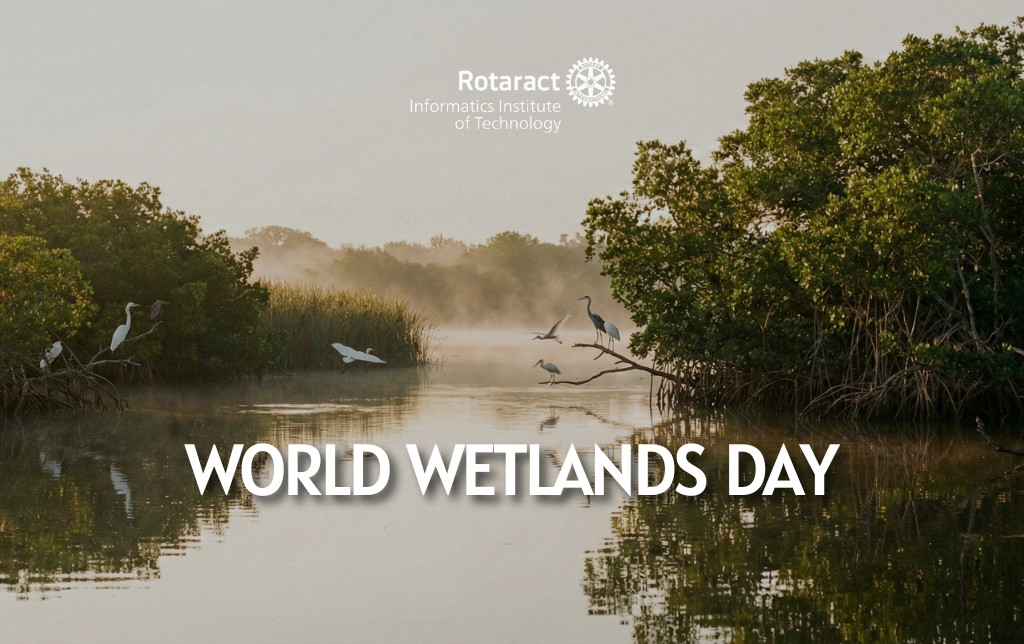
World Wetlands Day - Where Water Holds Life
International Days
Wetlands are some of the quietest places on earth, yet they carry so much life within them. On World Wetlands Day, we pause to notice ecosystems that rarely ask for attention but constantly give. From mangroves and marshes to lagoons and floodplains, wetlands exist in the gentle spaces between land and water, holding balance in ways we often overlook.
These ecosystems are natural protectors. They absorb excess rain, reduce flooding, filter pollutants, and help recharge groundwater. In moments of climate uncertainty, wetlands stand as natural shields, quietly reducing damage while asking for very little in return. Their role is not dramatic, but it is deeply essential.
Wetlands are also homes. Birds migrate thousands of kilometres just to rest on them. Fish breed in their shallow waters. Countless plant species grow nowhere else. When a wetland disappears, it is not just water that is lost, but entire communities of life that depend on it to survive.
In countries like Sri Lanka, wetlands are closely tied to daily life. They support fishing communities, agriculture, and local livelihoods while preserving biodiversity unique to our island. Yet many wetlands are threatened by pollution, land reclamation, and unchecked development. Loss often happens slowly, until one day what was once alive becomes silent.
World Wetlands Day reminds us that conservation is not only about distant forests or endangered animals. It is also about protecting the spaces that work quietly in the background, sustaining ecosystems and people alike. Awareness is the first step toward care, and care is what keeps these environments alive.
Protecting wetlands does not always require grand actions. Small choices matter. Reducing waste, supporting conservation efforts, and respecting natural waterways all contribute to preserving these ecosystems. When we protect wetlands, we protect water, food security, climate stability, and future generations.
Today is an invitation to notice what usually goes unseen. Wetlands may be quiet, but their value is immeasurable. By learning to protect them, we learn how deeply connected we are to nature and to each other.


